Messines and Silves: start with the inland Algarve
Twisted church pillars, João de Deus’s house and Silves’s deep cistern: concrete ideas for a separate cultural visit.
Read the guide ↗Esparto craft in Sarnadas, Islamic Salir and Querença’s water story: choose the theme that fits your visit.
Editorial desk · Updated · 4 min read
Alte, Salir and Querença are inland villages in Loulé municipality. They can be read through different subjects: village life and springs, the traces of an Islamic settlement, or the work of managing water. Nearby Sarnadas adds a practical craft story through esparto.
Choosing one of those interests makes a visit more memorable than putting every name into a fixed half-day list. These are cultural visits to arrange independently from the precise motor itinerary of any quad activity.
VisitPortugal identifies Alte's whitewashed centre, Fonte Pequena and Fonte Grande springs, the Casa da Memória craft interpretation and the nearby Queda do Vigário waterfall. They offer several ways to spend time away from the beach towns.
Keep the places distinct when reading a programme. A village stop, a spring visit and a waterfall photograph are not necessarily the same element of an outing. Water appearance and local access also vary; this page does not establish a swimming arrangement or motor access to waterside paths.
Casa do Esparto is in Sarnadas, within Alte parish, rather than in Alte village centre. The municipal Loulé Criativo project describes it as a place supporting a working craft, with artisan production and workshop activity. Esparto from the Algarve barrocal has been used for rope, mats, baskets and agricultural or fishing utensils.
The interesting connection is between a plant in the landscape and an everyday object. A visit focused on that relationship gives a reason to slow down and look at how something is made. Working-space visits or demonstrations depend on the current arrangement; the existence of a workshop does not promise that a demonstration is happening when you arrive.
The Salir museum interprets the Islamic settlement of the twelfth and thirteenth centuries. Castle-wall remains, houses and objects are central to the story. It is a way to think about ordinary life alongside defence, rather than treating a ruined wall as an isolated scenic backdrop.
This is a good choice for someone who enjoys linking objects to the place where people lived. Give the interpretation enough time to connect the remains and the everyday material. A short stop devoted only to a photograph would serve a different purpose.
Querença's Water Museological Pole explains water use and management over time. Its interpretation relates to wells, springs, streams, tanks and noras, traditional water-lifting structures. The subject connects groundwater resources with everyday agricultural work.
It changes the way a visitor reads the surrounding landscape: a well or tank becomes part of a system for obtaining and sharing water. The Geoparque Algarvensis page supplies that context without turning the water features into a leisure or riding route.
Craft-led: make Sarnadas and the esparto interpretation the main purpose. Arrange the visit around the activity actually available, then leave room for the village setting rather than assuming that a demonstration is included.
History-led: choose Salir and its settlement story. Concentrate on how walls, houses and objects relate, instead of fitting an additional village into every spare gap.
Landscape-led: use Querença's water interpretation to understand the agricultural setting. A separate stop in Alte may complement it when the actual travel and visitor arrangements allow, but no fixed connecting route is supplied here.
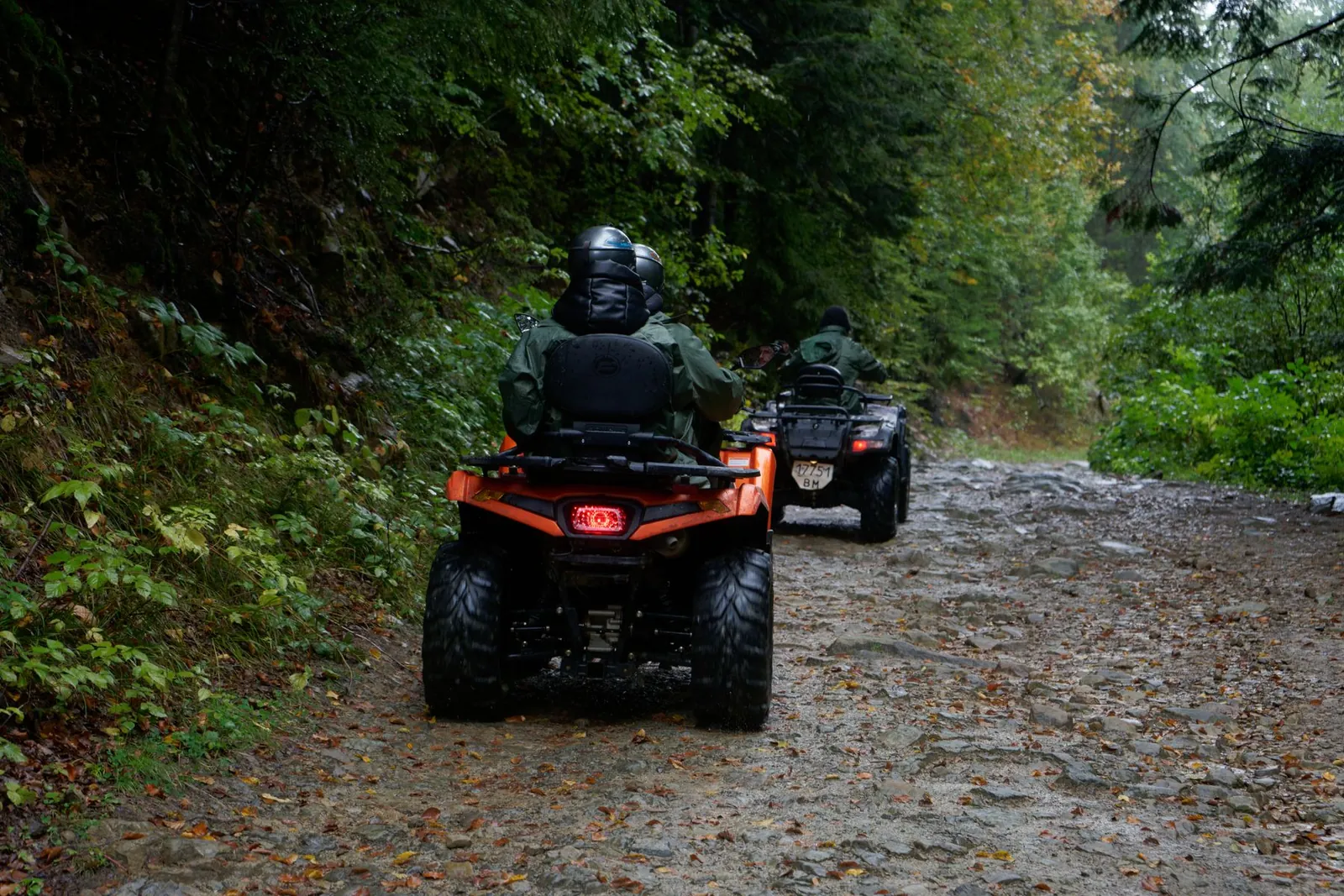
QuadVentura's published half-day description includes Alte among several stops; our programme dossier explains the format. Read what the stop actually contains before expecting an independent museum or craft visit to fit into it.
For a personal village session, choose permitted parking and explore the appropriate parts on foot. Keep entrances and working spaces clear. If you have only a short period, one well-chosen theme is usually a clearer plan than three places visited in a rush.
The Messines and Silves guide offers a different pairing of architecture, a writer's house and archaeology. The Monchique guide develops a mountain-valley alternative.
Checked in October 2026. Read live information for your date and the exact vehicle or place.