How to choose a quad bike tour in the Algarve
Read the programme, compare the full conditions and find out what happens when plans change.
Read the guide ↗From the practice area to the decision to continue: a practical guide for complete beginners.
Editorial desk · Updated · 4 min read
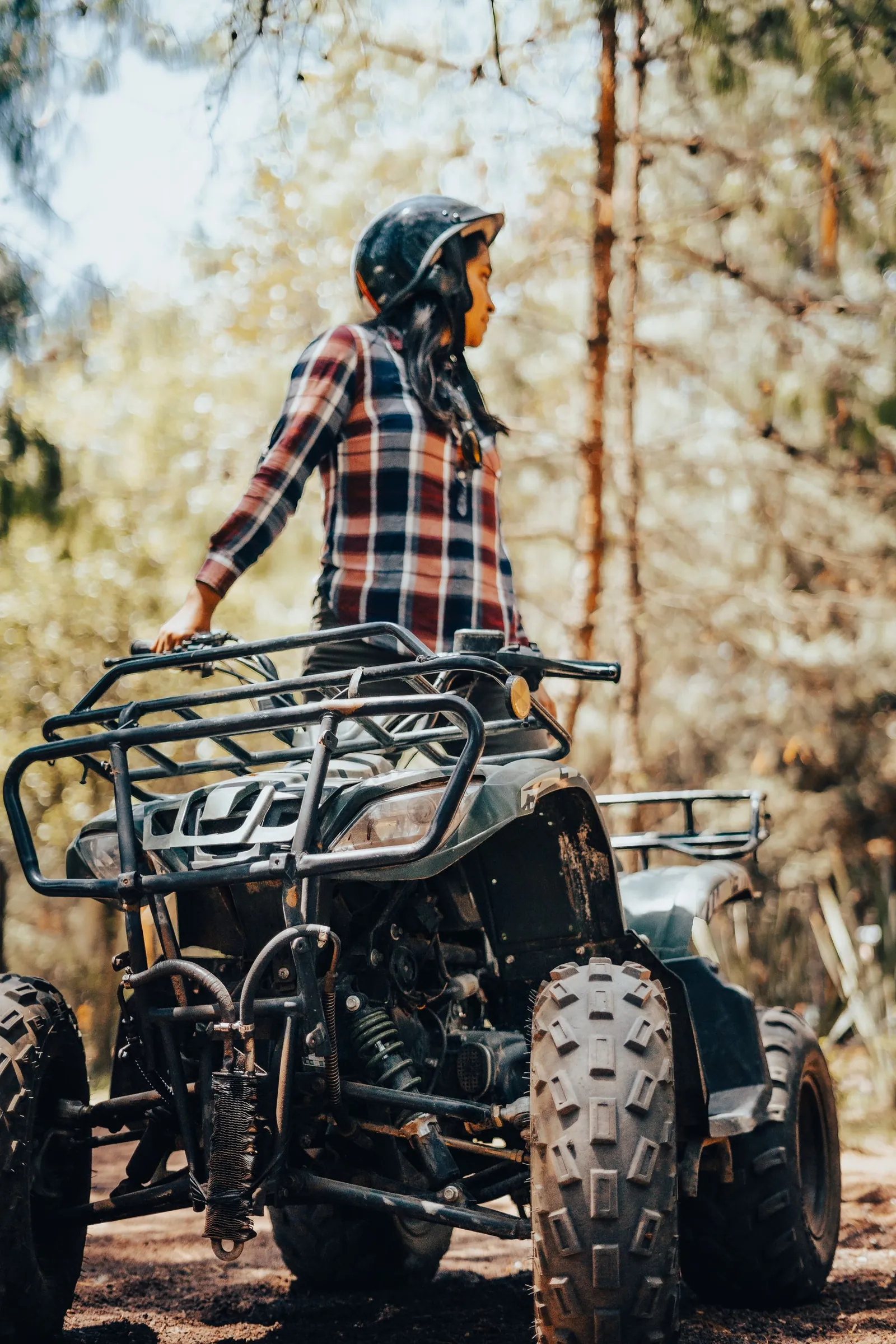
A first quad ride is not a test of courage. If you want to see the countryside, say so before choosing a programme that concentrates on difficult terrain. The most useful description explains the surfaces, the instruction and the pace. “Suitable for beginners” needs more detail than a photograph of a smiling group.
Tell the organiser that you have never used an ATV. Driving a car, cycling or riding a scooter does not tell them which quad controls you understand. Also mention any difficulty reaching controls or maintaining the required riding position, so a suitable vehicle and format can be discussed before departure.
Ask to see the controls on the machine you will use. A demonstration on a different model is a starting point, not the whole explanation. Find out how the guide communicates, how the group stops and what you should do if you become separated. You should not have to improvise these answers while moving.
An introduction needs a designated practice area and an opportunity to demonstrate the skills the instructor asks for. The ATV Safety Institute recommends practical training. A short holiday briefing should not be presented as the equivalent of a full rider-training course.
If a control feels confusing, ask for another explanation. If the vehicle does not fit or the practice feels uncomfortable, discuss a change of machine, a different format or stopping. Do not accept a passenger arrangement until the actual vehicle's approved seating has been confirmed.
Agree how this decision affects the booking before you pay. A reassuring verbal promise on departure morning is less useful than clear written terms about participants who cannot safely continue. The tour-selection guide explains how to compare that part of an offer.
Imagine two friends booking their first ride. One enjoys learning the controls; the other becomes tense during practice. A well-organised outing has a response that does not depend on the second friend keeping up at any cost. Perhaps the activity can be adapted; perhaps that person stops. The relevant question is what the organiser can actually arrange, not what an online description implies.
This is an illustrative decision, not a review of a local company. Ask who supervises a participant who stops and how they return. A group booking does not make everyone equally ready for the same itinerary.
Put loose belongings away before the briefing. Tell the guide if you would like photographs, then use only agreed stopping places. Looking for a phone or adjusting a camera should not compete with watching the terrain and following instructions.
After the ride, note what you enjoyed and what you found demanding: the length, dust, group size, controls or terrain. Those details make the next choice more useful than simply asking for a “bigger adventure”. Start with the packing guide and day-of checks when planning your next outing.
Think of the introduction as three separate tasks. First, the controls and communication are explained on the assigned machine. Next, the instructor observes practice in the designated area. Finally, the participant and organiser decide whether the planned programme fits that performance and comfort.
Those stages answer different questions. Understanding a demonstration does not automatically mean being ready to follow the full route; being able to operate a control does not settle whether the day feels comfortable. A second explanation or an adapted plan is a useful outcome of practice.
For the next outing, describe the experience concretely: which format you used, which part felt natural and which part required attention. That gives an organiser more information than simply selecting “intermediate” on a form.
Checked in October 2026. Read live information for your date and the exact vehicle or place.