Where can a quad legally go? Start with permission, not a track on a map
Roads, private land, conservation zones and temporary closures are different checks.
Read the guide ↗A useful approach to shared countryside, quiet stops and respectful photography.
Editorial desk · Updated · 3 min read
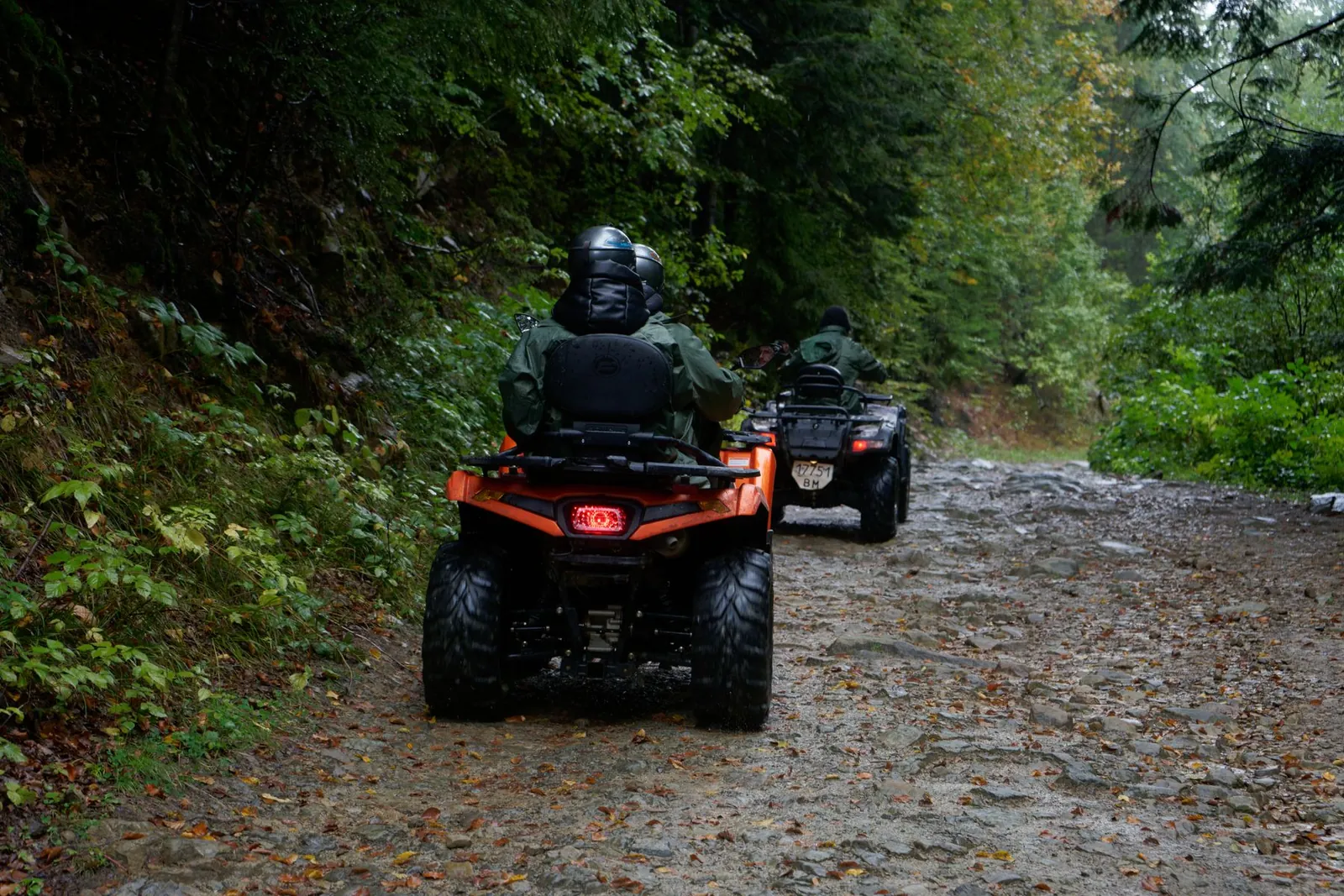
Choose an activity that can explain its itinerary and current permissions. A countryside label or a sustainability slogan is not evidence by itself. Ask how access is checked and how the group is managed around other users and settlements.
The access guide covers the questions behind that choice. Responsible behaviour does not create a right to use a closed route; it matters after lawful access has been established as well.
Agree communication and stopping procedures during the briefing. Follow the guide's directions rather than changing the pace to create a photograph or catch another vehicle. If you lose contact or become unsure, use the procedure that was explained, not an improvised race to catch up.
Tell the guide when you are uncomfortable. A problem discussed early is easier to manage than a participant silently exceeding their confidence. There is no value in making someone feel that asking to pause would spoil the group's day.
Keep an agreed stop quiet and use permitted parking. Avoid blocking entrances, farm access or narrow streets for a group photograph. Ask before photographing people, homes or work in progress.
On a village visit, leave the vehicle where it is allowed and explore on foot when appropriate. A place that is welcoming to visitors may still be unsuitable for a convoy to wait beside its door. Spend time understanding the place rather than treating it only as a background.
Watercourses, dunes and steep viewpoints can look appealing in photographs. Their appearance does not establish motor access or a sensible place to stop. Never create a new line through vegetation to improve a shot.
Keep food packaging and personal belongings contained so nothing is left behind at a stop. Ask where waste can be disposed of afterward rather than relying on a bin being present in a rural location. Secure equipment before the ride resumes.
Useful questions are specific: how are groups sized, where are stops made, what happens if conditions change and how is disturbance managed? Answers about an actual programme are more informative than a general promise to “respect nature”.
We do not certify operators or score the environmental impact of a ride. A reader can still use these questions to avoid choosing a programme purely for images that encourage behaviour they would not want to repeat.
After a holiday outing, note which decisions worked: an unrushed briefing, a sensible stop, a good response to a struggling participant or a plan changed because conditions required it. These are concrete criteria for a future choice.
For comparison beyond Portugal, consider how terrain, permissions and the surrounding community change the planning. The principles transfer; a route permission or licence decision does not. Read tour selection and photography stops together when preparing a group outing.