Responsible quad outings: less disturbance, better planning
A useful approach to shared countryside, quiet stops and respectful photography.
Read the guide ↗A four-picture story, useful composition choices and a simple way to plan agreed stops.
Editorial desk · Updated · 3 min read
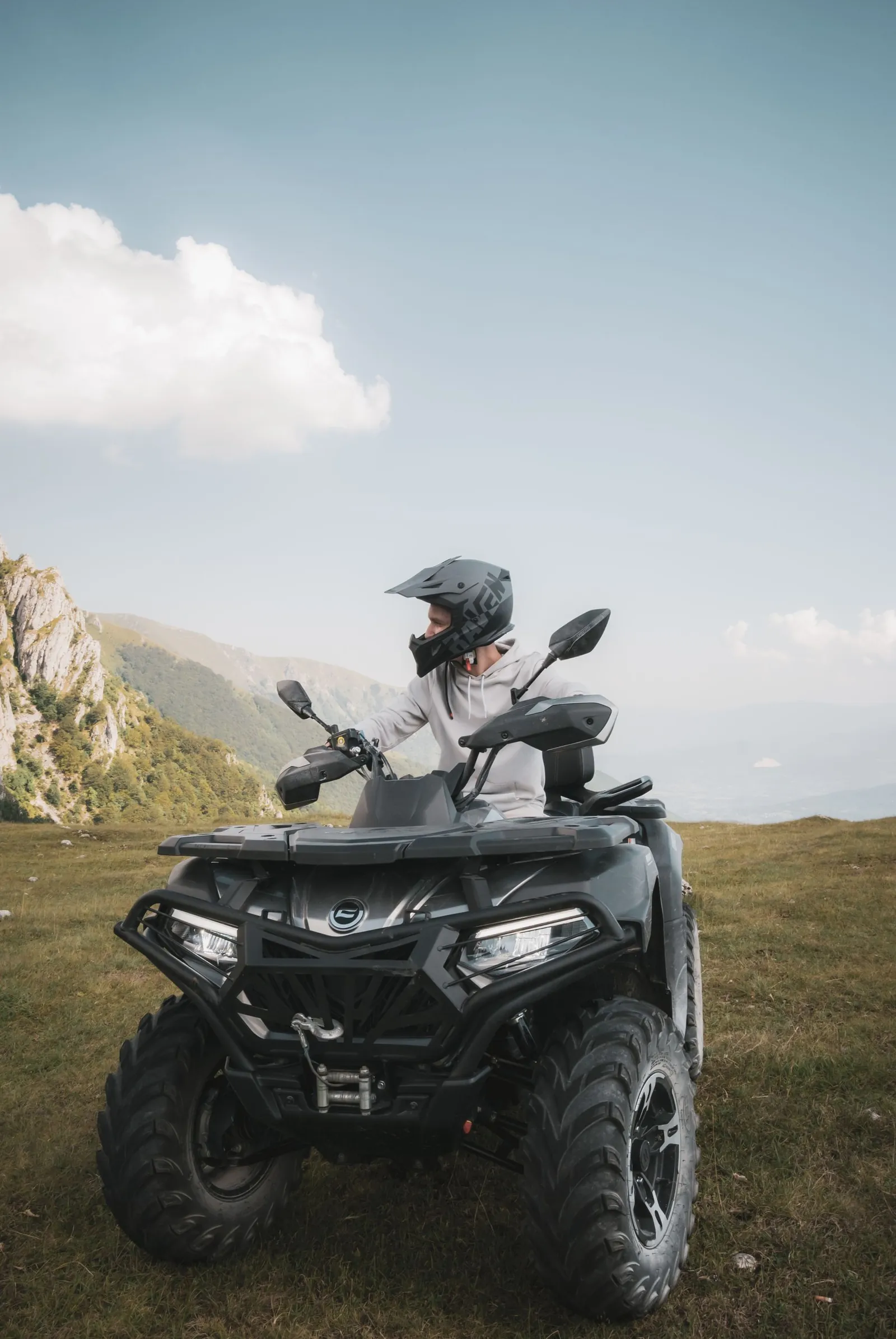
A landscape, a parked vehicle, a detail and an agreed group picture can say more than an attempt to record everything. Choose a few pictures you actually want, then fit them into the programme's permitted stops.
The point is to enjoy the outing while coming home with a coherent record. A photograph made from an appropriate stopping place can show the experience without asking anyone to repeat a manoeuvre for the camera.
On a small screen, scroll the table sideways to read every column.
| Picture | What it contributes | A simple composition choice |
|---|---|---|
| The setting | A sense of place | Make the landscape the subject from a permitted stopping place |
| The parked machine | The activity’s physical scale | Leave enough room in the frame to show the whole vehicle |
| A detail | Texture and equipment | Choose an unobtrusive detail without touching controls or removing covers |
| The group | People’s part in the day | Agree the photo and any sharing before arranging it |
For the landscape, keep the setting as the main subject instead of filling every frame with a vehicle. For the parked machine, leave room around it so the viewer can understand its scale. For a detail, choose a texture or piece of equipment that can be photographed without moving anything.
For a group picture, agree who wants to appear and where the photo can be made. Keep entrances and working areas clear. A short, considered stop is easier for everyone than repeatedly arranging the group during the outing.
Set up a simple arrangement before the briefing and secure it as instructed. Put the device away for the ride. Adjusting a phone, reviewing a picture or reaching for a loose camera should wait until an agreed stop.
If a mounted device is proposed, the equipment and provider's requirements govern its use. A mount must not interfere with protective equipment or the controls. The packing guide helps separate useful belongings from luggage that becomes a distraction.
In a village, explore the permitted pedestrian visit and respect people and private spaces. A spring, castle wall or farm entrance is not an invitation to reposition a quad in front of it. The place notes distinguish cultural visits from the separately authorised riding itinerary.
Avoid treating another person's photograph as a map. A frame leaves out boundaries, surfaces beyond it and the conditions on the day. Use the access guide for that part of the preparation.
Alongside the images, save the name of the place actually visited and a few notes about the programme. Identify generic vehicle photographs honestly when sharing them. A truthful caption is more useful than making every picture appear to document a route or model it cannot establish.
Obtain permission before publishing identifiable participants. Then choose the small set of images that tells the day clearly, leaving the outing itself as the main experience.