Algarve weather and wildfire checks before a quad outing
Use live official resources, then confirm local conditions and the organiser’s decision for the day.
Read the guide ↗Thermal-valley history, mountain-town architecture, water mills and Fóia: three distinct ways to shape a visit.
Editorial desk · Updated · 4 min read
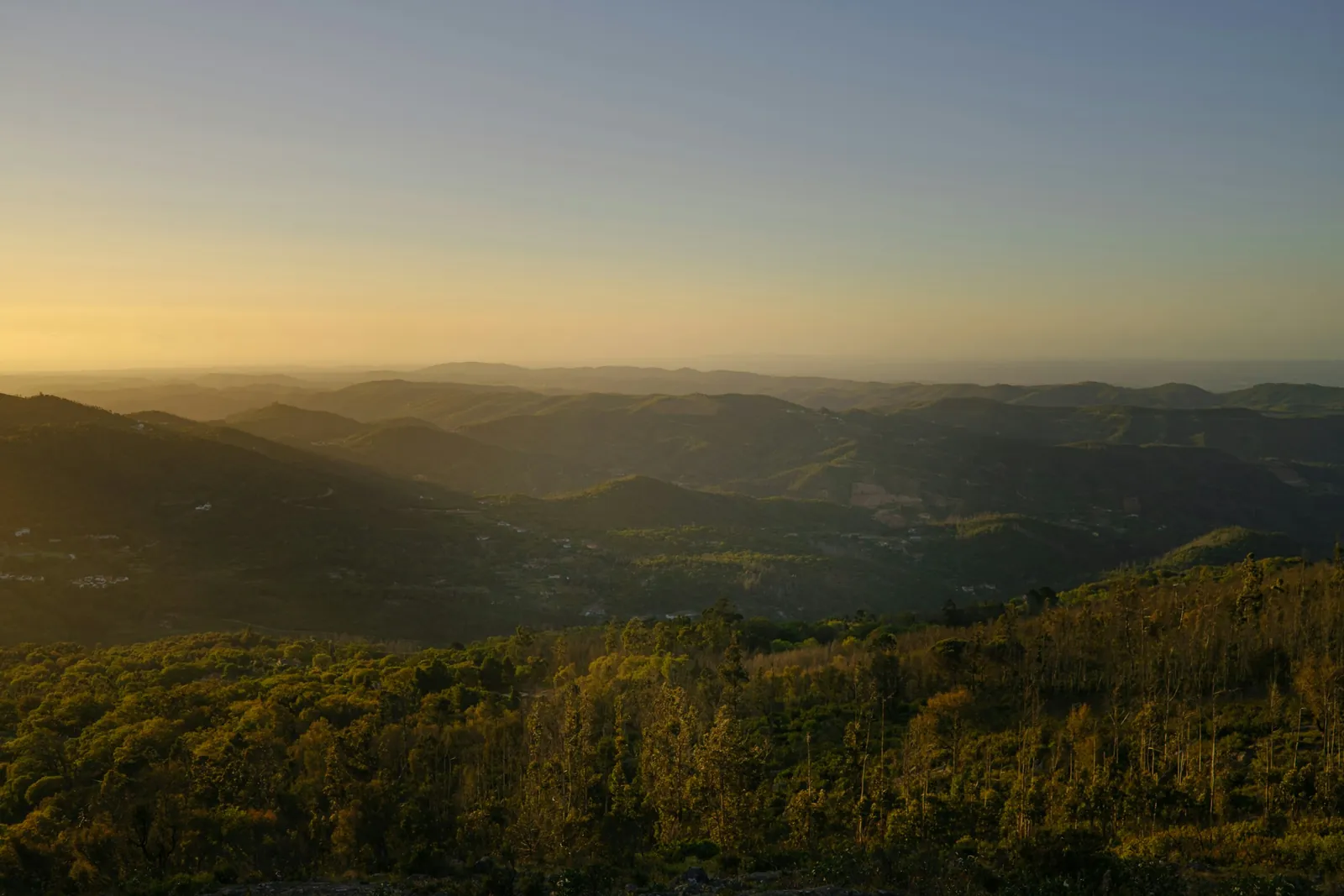
The Monchique area offers several subjects beyond a distant panorama: a thermal-valley setting, the architecture of a mountain town and the history of water mills. Fóia, at 902 metres, remains a separate upland viewpoint. A useful day can be built around one of these interests even when a long view is not the main attraction.
Keep the planned cultural visit and an organised quad programme distinct. A landscape description explains why the area is interesting; the actual activity requires its own itinerary and current access arrangements.
Caldas de Monchique lies in a valley of the Serra de Monchique at about 250 metres above sea level. VisitPortugal connects its thermal-water history with Roman use. It is a distinct locality from Monchique town and the higher Fóia setting.
That distinction helps organise expectations. A valley visit, a town session and a viewpoint outing are not interchangeable stops behind one place name. Current spa or building access belongs to the relevant visitor arrangements; a thermal history is not a medical claim or a promise of public bathing.
The parish heritage description explains the broad-based chaminés de saia through domestic kitchens: cooking, heating and smoking food were brought together in their function. They provide a practical way into the town's architecture, linking its shape to daily life.
The main church adds a different kind of detail through its Manueline portals on the west and south sides. The parish also describes eighteenth-century gilded carving in the main chapel, with angels holding the moon and sun. These details give a town visit something specific to look for, subject to the current access to the building.
Moinho do Poucochinho, at Barranco dos Pisões, is presented by the parish for educational and tourism interpretation. The history of local mills is connected with cereal cultivation and the movement of grain and flour.
The parish distinguishes the rodízio mechanism, using a horizontal water wheel on a vertical axis, from azenhas with horizontal axes. It is a compact technical story about how the landscape's water was put to work. Treat the mill as a separately arranged cultural interest, rather than assuming an open demonstration or inventing a connecting trail.
The older Algarve tourism brochure provides the stable 902-metre geographical reference. It does not establish present road or track access. Visibility and wind can alter the experience, so the live conditions and the actual visit arrangement remain important.
For a viewpoint-focused outing, leave space to change the plan when the conditions do not serve that purpose. The town's architecture or a confirmed cultural visit offers a different interest; it is not simply a lesser version of a panorama.
The built-heritage visit: choose Monchique town, using the chimneys and church details as your focus. Allow time to see the relationship between domestic and religious architecture instead of collecting only a broad street view.
The water-and-work visit: make the thermal-valley context or a confirmed mill interpretation the main subject. They tell different stories, so choose the one that actually fits your interests and arrangements.
The viewpoint visit: build around current visibility and access at Fóia. Keep the plan flexible and avoid making a guaranteed panorama the sole purpose of the day.
These are editorial visit possibilities, not timed circuits or published quad routes. There is no assumed connecting motor or walking trail between all the locations named here.
For a quad programme, describe experience and the type of day wanted, then use its actual surfaces, instruction and stopping plan. An upland label does not establish technical difficulty by itself. The first-ride guide helps beginners start with the introduction rather than the altitude.
Use the weather and fire resources for the travel date. For a village-based alternative elsewhere inland, compare Alte, Salir and Querença.
Checked in October 2026. Read live information for your date and the exact vehicle or place.