Alte, Salir and Querença: make time for the villages
Esparto craft in Sarnadas, Islamic Salir and Querença’s water story: choose the theme that fits your visit.
Read the guide ↗Twisted church pillars, João de Deus’s house and Silves’s deep cistern: concrete ideas for a separate cultural visit.
Editorial desk · Updated · 4 min read
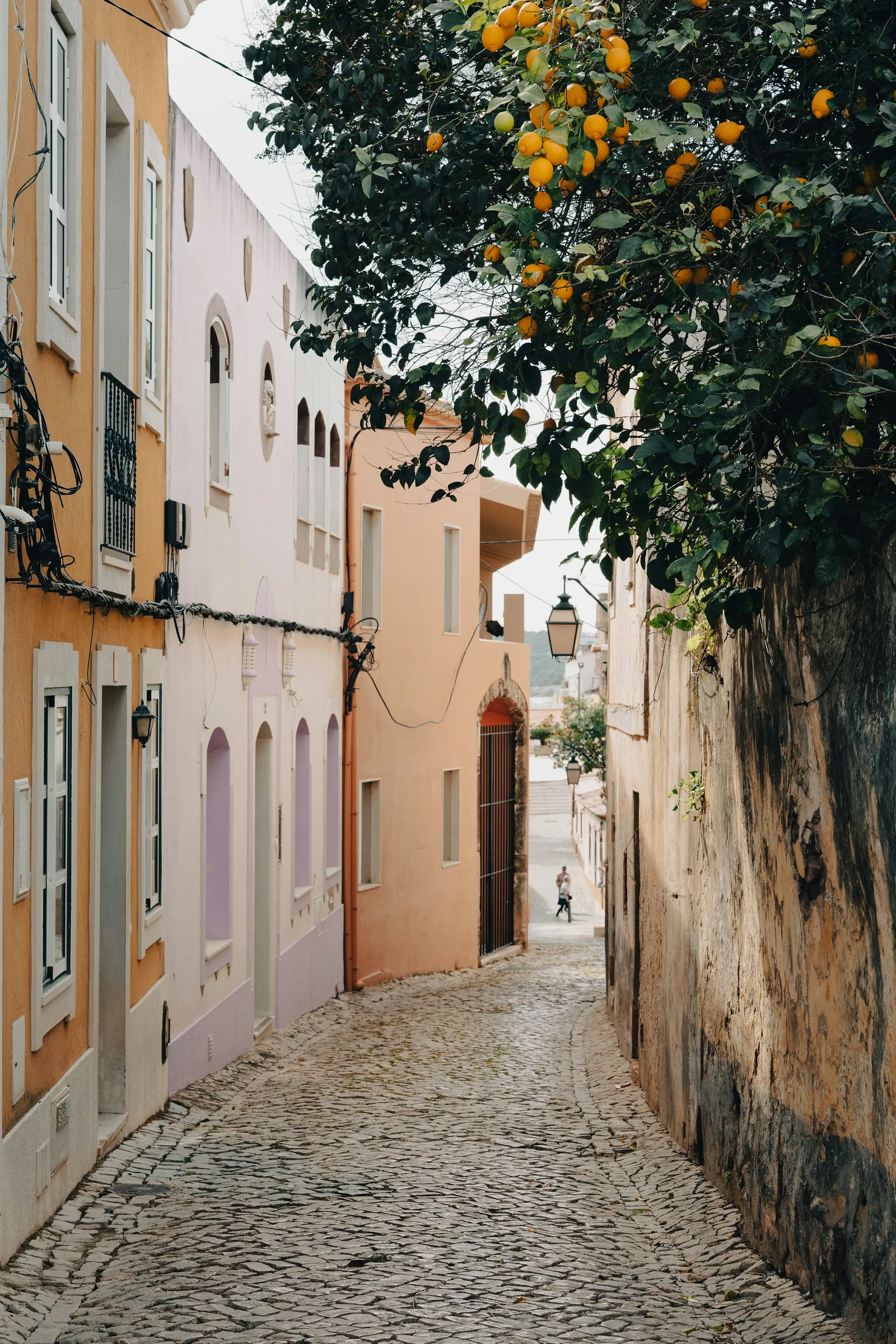
São Bartolomeu de Messines belongs to Silves municipality. For this journal, it is the starting point for understanding the inland area rather than treating “Algarve” as a single coastal departure point. A quad programme, a town visit and the transport between them are separate parts of the day.
Messines offers a compact cultural pairing around its main church and a writer's house. Silves opens a different story through its archaeology museum, sandstone monuments and the River Arade. You can choose one cluster and give it time, rather than trying to turn every landmark into a continuous riding circuit.
The main church of São Bartolomeu de Messines was extensively remodelled in the early sixteenth century. Its three naves are divided by rounded arches on unusual twisted pillars. The principal Baroque doorway bears the date 1716 and is framed by Solomonic columns, according to the national heritage inventory.
That gives the visit a clear focus: look at the rhythm of the pillars and compare the interior's structure with the later doorway. The building is more than a generic “village church” stop. Its changing architectural language supplies a small history lesson without needing to collect several distant monuments in one session.
Beside the church, in the old part of town at the foot of Penedo Grande, the Casa Museu João de Deus occupies the house where the poet and educator spent his adolescence. The heritage inventory is precise about that distinction: it is not his birthplace. The museum opened in 1997.
The stepped floors respond to sloping ground, while the interpretation connects domestic rooms, personal objects and a library with João de Deus's work. His Cartilha Maternal reading method gives the visit a theme beyond a celebrated name. Pairing the house with the church brings together architecture and education in one town-focused session.
The Municipal Archaeology Museum was created in 1990 around an Almohad cistern from the twelfth to thirteenth centuries. VisitPortugal describes it as about eighteen metres deep and two and a half metres in diameter, with a spiral stair and openings at different levels used as the water level changed.
The museum's collections move through prehistoric, Roman, Islamic and later periods. The cistern gives those layers a tangible centre: water storage becomes something you can understand as part of a town, rather than only a date in a chronology. Current visitor arrangements determine which parts can be experienced on the day.
Silves Castle occupies the higher part of town and uses the local red sandstone. The cathedral opposite it also shares that material, with Gothic and later Baroque building phases. These monuments form a useful visual relationship, rather than two unrelated photographs on a checklist.
The Arade historically connected Silves with the coast and maritime trade. The destination profile also places orange-growing fields around the river and identifies a bridge of medieval origin. A town visit can therefore move between the defensive hilltop, the religious buildings and the older river connection, using the permitted pedestrian approaches.
A shorter Messines visit: make the church and João de Deus house your main interests. The theme is compact and specific: stonework, domestic space and a reading method. Confirm the museum's current visitor arrangements before making entry essential to the plan.
A separate Silves session: place the archaeology museum at the centre, then allow time for the cathedral-and-castle setting or the river according to the access and time available. This is a thematic visit idea, not a tested timed circuit or a promise that every attraction shares the same opening pattern.
If one part of the day is a confirmed quad programme, arrange the cultural visit around its real check-in and return. A headline riding duration is not a door-to-door schedule. Our programme comparison shows how several published formats allocate time differently.
Identify the actual activity departure and the transport that is included. Use permitted parking for the town visit and explore the historic setting appropriately on foot. The landmarks above explain the region; they do not establish an ATV route between them.
For a different cultural interest, Alte, Salir and Querença bring plant-fibre craft, Islamic settlement and water management into the picture. For an upland setting, continue with Monchique and Fóia.
Checked in October 2026. Read live information for your date and the exact vehicle or place.